Inside the high-stakes arena of contemporary serious drifting, victory is no longer exclusively a product of sheer horsepower or pilot aggression. Instead, it has evolved into a multifaceted science that necessitates a scrupulous fusion of choosing a time-tested chassis, outfitting it with the correct competition components, and, most importantly, grasping its live behavior on the circuit through sophisticated drift telemetry software. This comprehensive guide will serve as your blueprint starting from the very first idea of a competition vehicle all the way to the final telemetry-optimized tweaks that turn a strong machine into a consistent winner. We will thoroughly explore the methodical process of chassis dynamics adjustment, demonstrating how a modern suspension tuning tool like a dedicated telemetry system removes assumptions and delivers unmatched visibility into your car's actual dynamics.
The bedrock of any successful competitive sliding vehicle is, indisputably, the base vehicle itself. Several vehicles have attained renowned reputation within the worldwide sliding scene due to their natural weight distribution, robust construction, and the vast ecosystem of specialist components available. Picking the correct car is the primary and most important selection a enthusiast will make. As an example, the BMW's E36 3 Series is widely regarded as one of the best all-around drift platforms of history. Its excellent evenly distributed mass, coupled with a rear-wheel-drive layout and bulletproof straight-six powerplants, establishes a platform that is simultaneously accessible for novices and extremely effective in the possession of a professional competitor. The evolution of this philosophy, the BMW E46 platform, builds upon these qualities with a even more developed chassis, broader stance for greater stability, and still increased steering angle directly from the manufacturer. A distinct formidable contender in the pro circuit is the Corvette C6.
This American sports car introduces a unique combination of benefits to the sliding sport, including a low-mass aluminium structure, a rear-mounted transaxle that contributes to an excellent balance, and the tremendous low-end power of a big LS V8 motor. This combination renders it an absolute force on track, designed of initiating and sustaining extended drifts with seemingly minimal use of acceleration. For builders looking for exceptional bang-for-the-buck, the Nissan 350Z rises above as a excellent example. It comes from the manufacturer with a stiff body structure, a decent factory LSD, and the responsive VQ35DE powerplant that delivers ample horsepower and torque for learning and advancing in the discipline. Its successor, the 370Z model, brings more refinements in structural rigidity, handling precision, and overall motor power, solidifying its place as a favorite choice among serious pilots. Further historic vehicles that merit consideration encompass the nimble rotary-powered Mazda FC RX-7, the ubiquitous Nissan S13, the V8-powered SN95 generation Mustang, the more recent BMW E90, and the small yet unbelievably playful and instructive MX-5 Miata. Each of these cars gives a unique palette of attributes, complexities, and potentials, but they all share the fundamental ingredients necessary to become a competitive drift car.
However, selecting the right chassis is merely the beginning. To release the true potential of any of these vehicles, significant modifications to the steering geometry and chassis control systems are utterly essential. This is where the domain of specialist drift-spec hardware comes into sharp view. The one most game-changing improvement for a dedicated drift car is the fitting of a maximum-angle angle modification kit. These engineered kits, such as those developed by performance brands like specialist manufacturers, are designed to radically increase the vehicle's maximum steering angle. A factory production vehicle is extremely restricted in how far its steering tires can pivot, a design compromise for public road operation. In drifting, but, aggressive countersteering is continuously necessary to manage and maintain a slide. An steering kit exchanges the factory uprights, linkages, and sometimes control arms with parts that permit the steered wheels to achieve angles beyond 70 or even 80 °, as opposed to a typical factory setting of around 40 to 50 degs.
This tremendously expanded capability provides the pilot with exponentially greater authority during a drift, enabling it to be far simpler to begin a slide, maintain it through a extended bend, and switch smoothly from one side to another. The improvement in controllability is truly revolutionary. Combined with a properly chosen steering kit is the equally essential upgrade to the chassis's damping system. Generic or even high-end road adjustable suspension are just not designed for the unique and extreme requirements of competitive oversteer. A drift-spec pair of suspension units is paramount. These specialized dampers feature custom damping rates and spring strength that are tuned for the rapid mass transition that is characteristic of drifting. When a pilot initiates a drift, the vehicle's mass is transferred forcefully to the outside of the corner. Correct performance dampers manage this transfer in a controllable fashion, permitting the vehicle to stabilize quickly and offering the driver clear feel through the controls and seat. They also provide exact adjustment of stance, rebound and compression firmness, and cross-weight, which are all integral elements of dialing in the vehicle's dynamics to a particular circuit or driving technique. As a system, a high-quality angle modification system and a expertly specified pair of performance coilovers form the absolute mechanical base upon which all subsequent refinement is constructed.
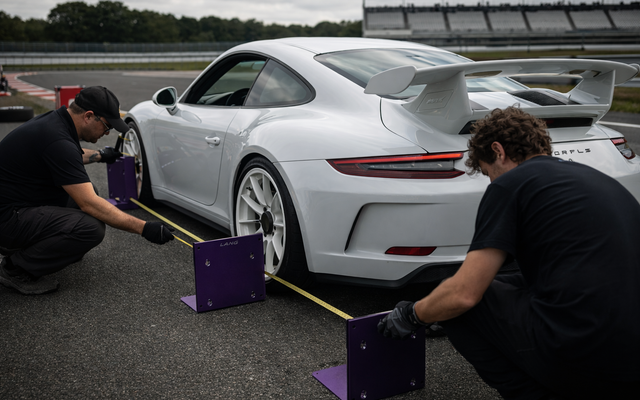
Once the essential hardware is fitted, the next vital step in the development is the meticulous setting of the vehicle's suspension geometry. This is the domain of car suspension tuning, a methodology that can seem intimidating to the uninitiated but is, in practice, the key to converting a collection of high-performance components into a harmonious and predictable vehicle. The most critical element of tuning for sliding is definitely camber. Camber angle is the angle of the tire relative to the perfectly straight line when looked at from the forward of the vehicle. If the upper part of the tire is angled towards the chassis, this is referred to as camber-in. For drifting, an inward tilt on the front axle wheels is generally used and is seen as critical. The purpose is deeply linked to physics.
When a vehicle is turning at high angles, the chassis rolls towards the external of the bend. This chassis roll causes the outside front wheel to lose its best contact patch with the tarmac. By applying negative camber, the tire is pre-leaned to account for this lean. As the chassis leans into the turn, the outside front tire gains a better contact patch against the road surface, maximizing its grip at the precise moment when it is most required for control. Typically, front camber settings for a dedicated drift machine fall between approximately -3 degrees to as high as -5 degrees or even beyond, based on the parameters of the car configuration, rubber choice, and operator style. The rear axle tires also use negative camber, but the settings are usually more conservative and less aggressive than the front axle. Too much inward lean at the rear can cause the vehicle to overly loose and hard to predict on throttle use, as it reduces the effective grip area of the powered wheels during straight-line throttle application. Hence, rear camber settings are often in the vicinity of -1 degree to -3 degrees, finding a careful balance between giving sufficient lateral grip to assist in initiating and maintaining the drift while also preserving good hook-up for acceleration the bend. Camber is merely one element of the broader alignment equation, which furthermore includes toe angle, caster angle, and bump steer adjustment.
Toe setting refers to the direction of the tires when viewed from the top. Positive toe means the front edges of the wheels are nearer together than the rear edges, while outward toe means the converse. For oversteer, a small amount of front axle negative toe is often employed to improve the initial handling reaction, making the chassis feel more agile and willing to begin a oversteer moment. Rear toe setting is generally set to neutral or a very slight amount of inward toe to encourage straight-line stability under acceleration. Caster is the longitudinal or rearward inclination of the steering axis when viewed from the side-on of the vehicle. Positive positive caster enhances self-centering and high-speed stability, and it additionally boosts inward lean increase during turning, which is highly beneficial. Adjusting these values is a detailed dance where a adjustment to one setting can and often will influence the others. The traditional method for setting a chassis's suspension geometry for sliding has for a long time been a time-consuming affair of trial and error. A driver or team would introduce a change based on a hunch, run the chassis on track, use the driver's individual sensation and impressions, and then apply a further change. This process would repeat time after time until the car felt "right" or the scheduled testing time ran out. This methodology is not just exceptionally wasteful in terms of time and resources, but it is furthermore deeply inaccurate.
Pilot perception is a famously subjective data source, affected by many variables such as tiredness, changing track conditions, ambient heat, and simply the focus of the operator on that specific session. What feels "tail-happy" on one lap might feel "tight" on the subsequent run, resulting in contradictory data and counterproductive tweaks. This traditional limitation in chassis setup is precisely where state-of-the-art technology has made its mark to transform the landscape.
The development and application of specialized suspension tuning applications has introduced a completely new age for engineering and optimizing competitive sliding vehicles. This new generation of tools, exemplified by cutting-edge systems like modern telemetry hardware, operate by actively recording the live mechanical movement of the vehicle as it is being driven on the circuit. In contrast to depending on personal feedback, these systems collect measurable metrics on essential factors such as damper compression and extension, wheel speed, lateral and longitudinal g-forces, lock position, and driver input input. This collected information flow is then interpreted by sophisticated algorithms that can visualize and decode the metrics in a actionable format. For the very first time, drivers and crews can observe exactly what the vehicle is exhibiting at each millisecond of a lap. This capability changes the entire chassis setup workflow. Imagine the particular goal of dialing in the front camber for a particular chassis. Instead of introducing a change from -3 degrees to -3.5 degrees and then driving multiple laps to try and "feel" a change, drift telemetry software a suspension tuning tool can provide immediate and definitive information. The application can display graphically how the suspension's loading is performing during the key moments of a angle: the initial flick, holding the angle, and changing direction. It can reveal if the present value is permitting the loaded tire to achieve ideal loading or if the rubber is over-stressed on its outside edge.
The tool can then provide empirical suggestions for change. Perhaps the data shows that the outside front tire is even overworking its edge at -3.5 degrees of camber, suggesting that even more angle, say -4 degrees, might be warranted. On the other hand, the data might show that the tread is failing to achieving heat or that the inside edge is degrading unevenly, which could point to that there is overly aggressive angle and a modest lessening back to -3.2 degrees would be more efficient. This standard of accuracy and useful intelligence was literally unattainable in the era of pure seat-of-the-pants adjustment.
The benefit of employing a advanced drift telemetry system goes well beyond just optimizing camber. It functions as an car suspension tuning essential damper adjustment manual that is customized to your specific car. When adjusting the shock absorber values on your adjustable dampers, instead of depending on imprecise tips or mimicking another team's settings, you can utilize the data to observe how the car is reacting in relation to your changes. The tool can display the damper movement path over a run, showing if the dampers are controlling the weight transfer effectively or if they are allowing the vehicle to become unsettled uncontrollably after a direction change. It can assist in identifying issues like excessive compression or topping out, enabling you to apply educated choices to preload settings, rebound/compression values, or stance. This approach extends similarly to the detailed task of car alignment tuning. Beyond camber, the system can provide analysis into how changes to toe and caster are impacting the vehicle's stability during different maneuvers of a drift. vehicle dynamics tool For instance, it can allow you to find the ideal amount of front axle toe out for your particular steering setup and driving approach by showing the speed of initial response and the stability of the car at maximum lock. This transforms the software an exceptionally useful drift suspension tuning guide that is actively informed by the real-world behavior of your personal vehicle on the tarmac. It elevates the complete project from a subjective skill into a scientific development procedure.
Additionally, the application of a tool like data acquisition is in no way restricted to expert tuners with large budgets. For the grassroots driver, it functions as an powerful educational tool. It in essence gives the driver with the insight of a professional race engineer without requiring the typical expense. It speeds up the learning curve by providing definitive solutions to questions that would otherwise take countless track days of experimentation to solve. A builder can learn how their individual car responds to specific adjustments, developing a deeper knowledge of car control in the process. It furthermore makes accessible high-level performance tuning principles, allowing every enthusiast with the drive to perfect their vehicle to accomplish it in a systematic and effective way. This is particularly valuable in a sport like oversteer competition, where setup expertise has historically been a highly secretive asset among professional teams. In the modern era, that knowledge can be in the toolkit of any motivated enthusiast.
In the final analysis, the journey to engineering and tuning the perfect high-performance drift machine is a comprehensive endeavor that perfectly combines classic hardware knowledge with cutting-edge data solutions. It begins with the wise pick of a proven platform, then built upon the application of critical drift-spec parts like maximum-angle steering angle kits and correctly selected drift-spec adjustable dampers. The journey then moves into the precision realm of car suspension tuning, where settings like camber angle, toe, and caster are precisely configured to complement the vehicle's new capabilities and the pilot's individual needs. The final step, and what truly separates the modern approach from the old ways, is the adoption of a advanced vehicle dynamics tool. This system removes the uncertainty and waste of solely feel-based setup by delivering quantifiable, live telemetry on how the car is actually functioning. It functions as an indispensable engineering partner, a actionable coilover setup manual, and a all-in-one chassis development system. As a complete package, this complete approach ensures that every component of the drift machine—from the choice of the car to the final click on the suspension—is optimized for peak success on the track. It represents the full maturation of the discipline of drifting, connecting raw car control with surgical vehicle setup to forge the most dominant cars imaginable.